
Yield
How manufacturers reduce yield loss and rework
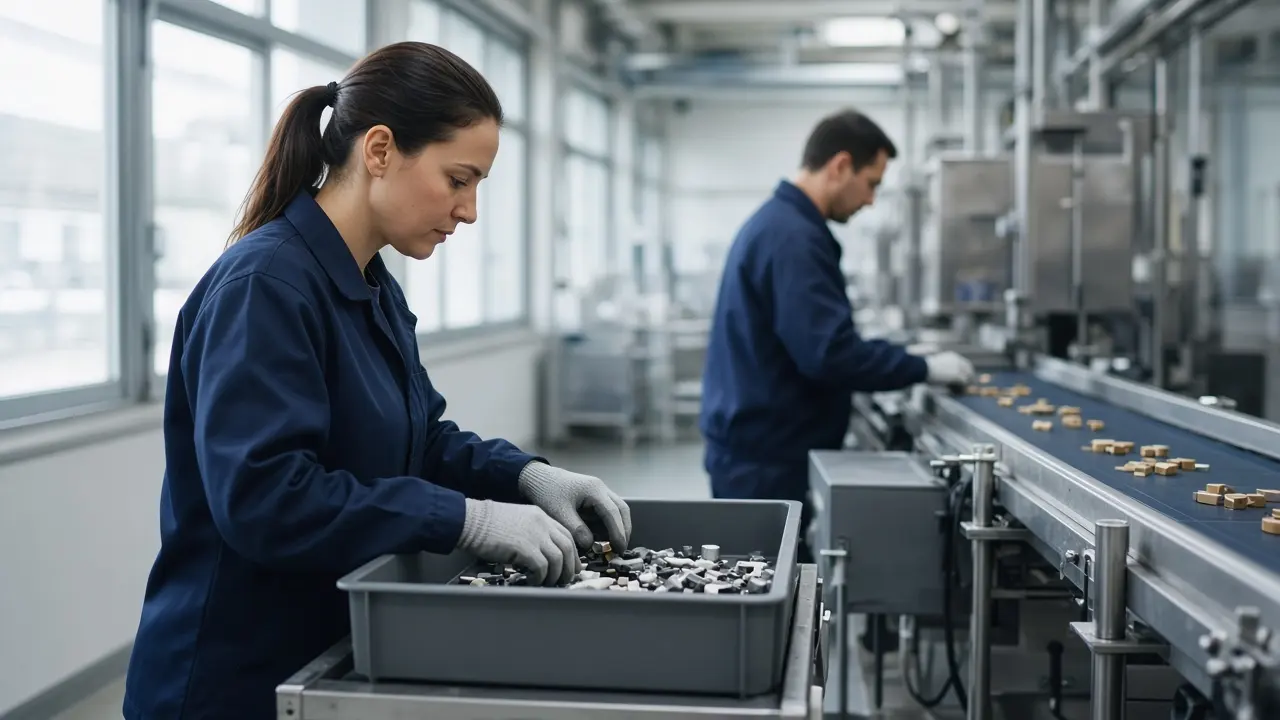
Yield loss and rework are not mysteries that appear at month end. They are specific batches, on specific steps, with a reason someone on the floor already suspected. The plants that shrink them do not start with a slogan about continuous improvement. They start by making the miss visible early enough that the current run, or the very next one, can change.
If the first time finance sees scrap is a variance account after close, the cycle that produced it is gone. The report is accurate and late. Margin decisions then happen in a meeting about history.
Separate the loss you can still touch from the loss you can only explain
There are two clocks. While the batch is open, a short yield, a failed check, or an over-addition can still be held, adjusted, or stopped. After the batch record closes, the same facts are an explanation. Rework, when it is possible at all, puts the product back on a line that was supposed to be making the next order.
That is why in-process visibility is the first move, not a side project. You cannot reduce a loss you meet only in the post-mortem. The third of the five daily decisions — what needs attention right now — is the operating version of this idea.
Name the reason, or the percentage will not move
A plant-wide yield percent is a scoreboard. It does not tell a supervisor what to change on Tuesday. A loss that can be worked has a place to stand:
- Recipe and step. Cleanout, fill, dry, pack — the step where the quantity left the expected path.
- Line or vessel. A loss that follows one piece of equipment is not a formula problem.
- Material lot. A bad or short-dated input shows up as yield and should not be averaged into “the process.”
- Reason. Spill, setup, specification, scale, rework, sample. A lump called “scrap” cannot be assigned to anyone.
Once reasons exist, the next batch of that recipe can be released with the standard updated or the cause assigned. Theoretical yield that nobody has hit in a year is not a target. It is a permanent variance. Updating the expected yield is part of quoting from current formula costs, because sales is still pricing a yield the plant does not get.
Rework is a schedule problem as well as a material problem
The material you throw away is the obvious cost. The quieter cost is the line. Rework consumes the crew, the changeover, and the slot another customer was promised. It also dirties genealogy: which lots are in the reworked goods, and which customers could receive them, has to stay answerable. If rework is tracked on a side sheet, both the cost and the trace break.
Record rework as its own batch activity, with the lots it consumed and the time it took. Then it shows up next to the original batch instead of disappearing into overhead. MFGMAX Nutra ERP keeps batch execution, costing, and lot genealogy together so yield variance and the record of what shipped are not two systems. Shops that lose yield in sheets and offcuts rather than blends — cabinetry and millwork — can use the same habit on a job. That version is comparing the estimate with the hours and material the job actually used.
A practical sequence
- Show actual versus expected yield on the open batch, not only after close.
- Require a reason when the gap crosses the tolerance you already live with.
- Review the reasons by recipe before the next release of that formula, while the crew still remembers the run.
- Feed the yield you really get back into the cost used for the next quote.
None of those steps need a new theory of manufacturing. They need the batch, the cost, and the next schedule to share one set of numbers. Plants that still reconstruct yield from a binder will keep writing the lesson after the material is gone.
Questions plant teams ask
How can manufacturers reduce yield loss and rework?
See yield and the reason for loss while the batch is open, record a cause instead of a lump of scrap, and compare actual consumption with the formula before the next batch of that recipe is released.
Why does rework often cost more than the scrap it replaces?
Rework spends the line, the crew, and often extra material a second time, and it pushes every later order. The original material loss is only the first invoice. The schedule delay is the second.
What is a useful yield variance, as opposed to a single plant-wide percentage?
A useful variance is tied to a recipe, a step, a line, and a reason code. A single monthly yield percentage cannot tell you whether to fix a scale, a cleanout, a specification, or a standard that was never realistic.
| Spreadsheet or binder | One record | |
|---|---|---|
| Where the loss is recorded | A variance at close | Its own batch activity, with the lots and the time |
| When you see it | After the material is gone | During the run |
| The next quote | Still uses the theoretical yield | Uses the yield this batch recorded |