Home / Blog / Batch and process
Batch and process manufacturing
Five decisions every batch and process manufacturer makes every day
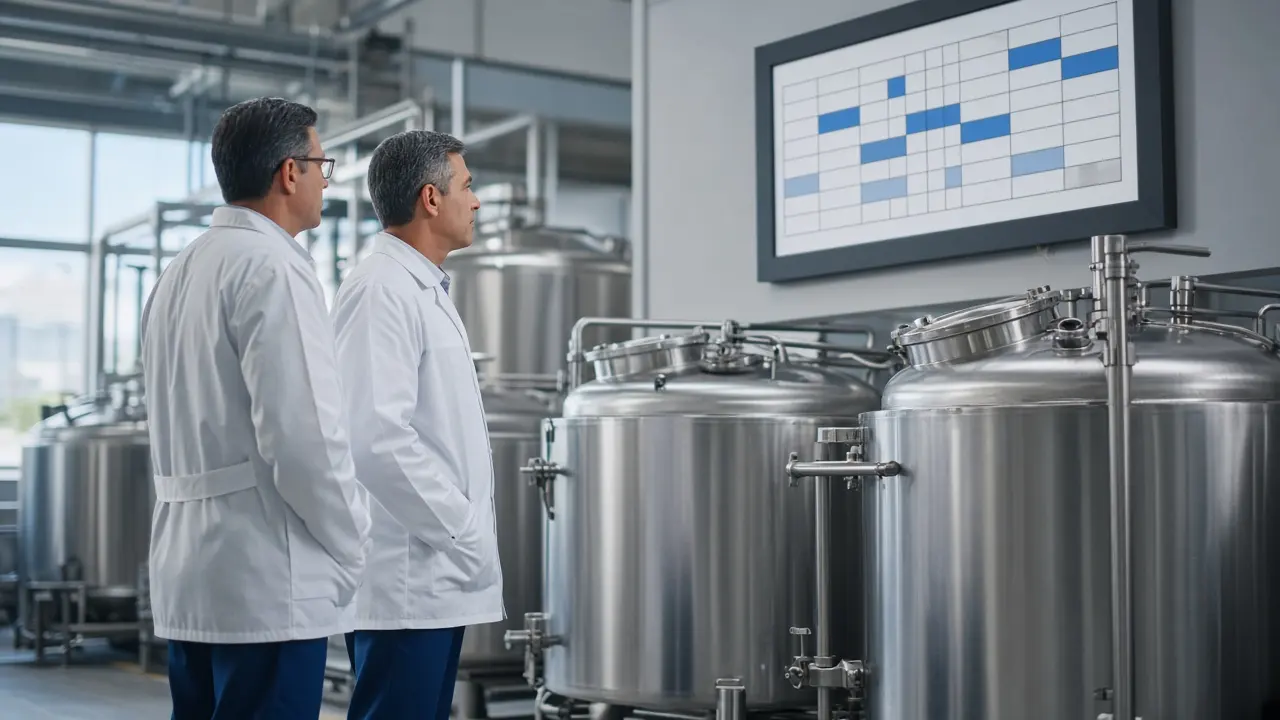
A good month in a batch or process plant is not settled in a quarterly review. It is settled on the floor, in the same five places, every operating day. Whether to take the order. Whether the schedule can keep the promise. What needs a person while the batch is still open. Whether the shipment can leave with a record behind it. And what that batch should change before the next one is released.
The formula changes from plant to plant. A nutraceutical blender, a food kitchen, a personal-care line, and a chemical batch do not share a recipe. They do share the decisions. What separates a calm month from a noisy one is how current the information is at the moment someone has to choose.
1. Is this the right order to take?
Accepting an order is a bet on the cost formula. The quote has to hold up against ingredient prices now, the yield that recipe usually returns, and a production calendar that may already be full. In a lot of plants the formula cost still reflects last quarter, because updating it by hand is the task that loses to the run that has to ship today.
The order goes out. The material swing has already taken the margin, and the quote never showed it. The plants that quote cleanly use the same decision with a cost that moves when ingredients and yields move. The number on the proposal is the number operations expect to make. That is what current formula costing is for, and it is how MFGMAX Nutra ERP connects quoting to the recipe instead of to a spreadsheet snapshot.
2. Can we deliver what we promised?
A schedule is only as honest as the constraints it can see: which line, which tank or vessel, how long the changeover really takes, and which ingredient lot will still be good when the batch is supposed to start. Plans built from a whiteboard often meet the constraint after the plan has already been sent to the customer.
A lot that is on the shelf this morning can expire the day before the line is free. The batch slips, material is wasted, or someone substitutes under pressure. Putting lot expiration into the schedule before it is published is the difference between planning around a constraint and discovering it mid-week.
3. What needs attention while the batch is open?
Yield and in-process quality are often invisible until the batch record is closed. By then the batch is what it is. The remaining work is a note for next time. When those numbers are visible during the run, the adjustment happens while there is still material and time to adjust.
That is in-process visibility. It is also the first practical step toward less yield loss and less rework. A lesson learned after closeout is useful. It does not rescue the batch that already finished short.
4. Can we ship with a record we can defend?
Lot genealogy answers one question: which raw-material lots ended up in which finished goods, and where those goods went. Many plants can answer it. They answer it by walking formulation sheets, production logs, and shipping paperwork by hand. That holds until a customer, a retailer, or an auditor wants the answer this afternoon.
Genealogy that traces from raw lot to finished goods in minutes changes what a recall costs in time and what an audit feels like on the phone. Traceability for recalls and audits is not a paperwork project you start the day the letter arrives. It is a property of how the batch was recorded while it ran. Nutra ERP is built around lot genealogy, QC release, and recall-ready traceability for that reason.
5. What should the next cycle do differently?
Actual cost per batch — ingredient variance, yield loss, rework — often appears long after the books close. The cycle that created the number is over, and so is the chance to change it. Plants that see cost and yield variance close to the run can still influence the batches that have not been released.
None of the five decisions are new. Batch and process manufacturing has always required them. What changed is the room between the moment you must decide and the moment you have the right information. Plants closing that room on costing, scheduling, the open batch, genealogy, and batch cost spend their time on the next decision. Plants whose system cannot keep up spend it reconstructing the last one.
If the shop still runs on spreadsheets and paper batch records, if a system that used to be enough is now the bottleneck, or if you are comparing what to run next, use these five as the test. Which ones does the current setup actually support, and which ones are still solved by hand?
Questions plant teams ask
Why is current formula costing important when quoting an order?
Current formula costing prices the quote from today’s ingredient costs and the yield the recipe actually returns. A cost roll from last quarter hides material swings until the order has already shipped, which is when the margin is already gone.
Why do lot expiration dates matter in production planning?
A lot can be on hand today and still be unusable on the day the line is free. Putting expiration next to the schedule avoids starting a batch that will stall, waste material, or force a last-minute substitution.
What is in-process visibility and why does it matter?
In-process visibility means seeing yield and quality while the batch is still running. The team can correct drift before the batch record closes. After closeout, the only option left is a note for the next run.
How can manufacturers reduce yield loss and rework?
Make yield, quality, and the reasons for loss visible during the run, not after it. Rework and scrap drop when the adjustment happens on the open batch. A closed record can explain the loss. It cannot undo it.
Why is lot genealogy important for recalls and audits?
A recall or an audit asks which raw lots went into which finished goods, and who received them. Traceable genealogy answers that from the system in minutes. Reconstructing it from batch tickets, production logs, and bills of lading takes days.
| Spreadsheet or binder | One record | |
|---|---|---|
| The quote | Last quarter’s cost | The recipe and yield the plant will run |
| The schedule | A lot that expires before the tank is free | Expiration on the lot before it is issued |
| The shipment | A record assembled afterward | The batch that was actually run |