Traceability
Lot tracking vs. lot genealogy
Lot tracking and lot genealogy get used as if they were one control. They answer different questions. A plant can be careful about the first and still be unable to answer the second when a customer, a supplier, or an auditor calls.
Lot tracking is the lot as inventory. The number, the quantity, the location, and the status: on hand, committed, held, or already shipped. It tells the warehouse what it may pick. It does not, by itself, tell anyone which finished goods were made from it.
Genealogy is the path through production
Lot genealogy is that path. Backward: this finished lot was made from these component lots, on this batch or job. Forward: this raw lot was consumed by these batches, which made these finished lots, which went on these shipments. One direction without the other leaves either the cause or the exposure unnamed.
The map has to be what the plant did, not only what the formula said it would do. A substitution, a rework addition, and a lot that was held and then released all belong on it. Why lot genealogy matters for recalls and audits is the same map on the day someone is waiting for the answer.
Where the two records fall apart
| Lot tracking | Lot genealogy | |
|---|---|---|
| Question | Where is this lot, and may we use it? | Which batches used it, and who received the result? |
| Usual home | The warehouse quantity | The batch or job, plus the shipment |
| Fails when | The status is in a different file from the quantity | Consumption and shipping were never the same record |
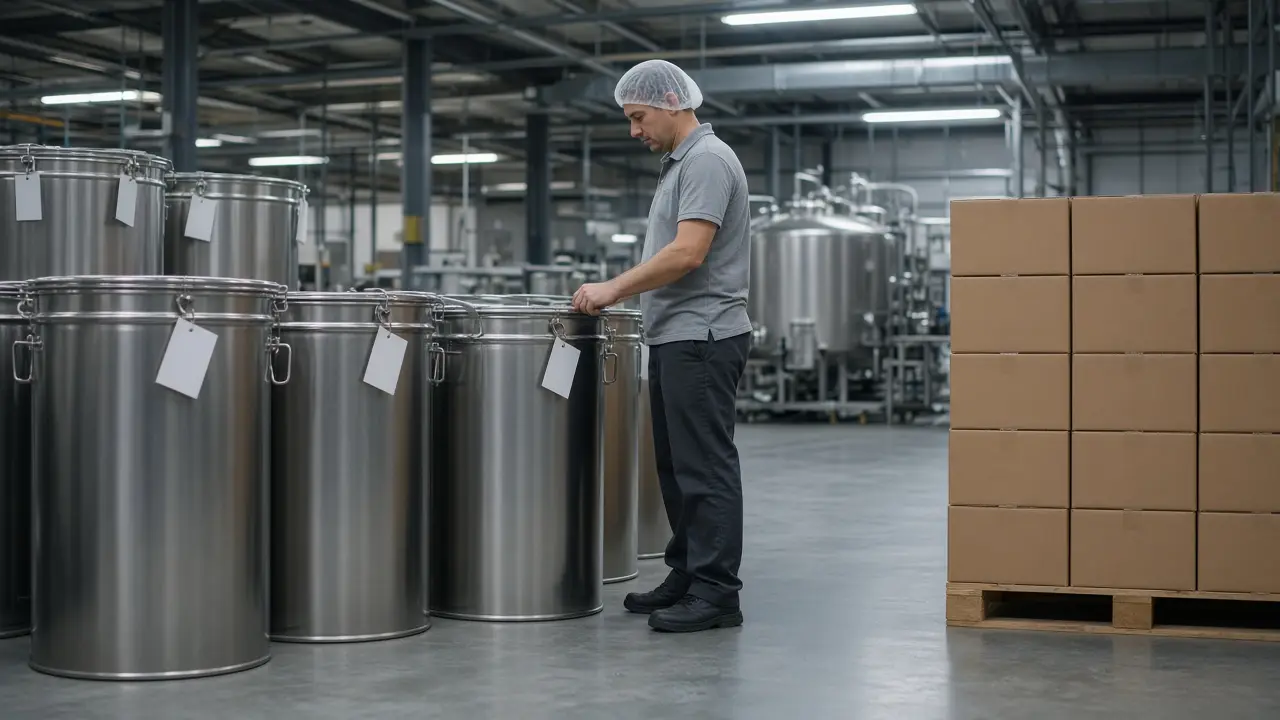
A label on a drum is tracking. A batch ticket that names the formula but not the lots issued is not genealogy. Shipping that names a customer and not the finished lot stops the map at the dock.
What has to be written while the batch is open
- The lots issued, including a substitution.
- The batch or job that consumed them.
- The finished lots that batch created.
- The hold or release, so a lot that should not ship is a different quantity from stock that may.
- The shipment, so the finished lot has a customer.
If those lines are typed after the truck leaves, the plant is reconstructing. Reconstruction can be careful and still be late. Nutraceutical manufacturing ERP, food manufacturing ERP, cosmetics manufacturing software, and pharmaceutical manufacturing software keep the lots, the batch, and the shipment on one record while the batch is open.
This does not replace your quality system, a validation, or an FDA approval.
This does not replace your food-safety program, your specifications, or a required approval.
This does not replace your safety assessment, your specifications, or a required approval.
A worked example, not a customer result
Raw lot R-14 is received and tracked: 400 kilograms, released, in one bin. That is tracking. The week uses 180 kilograms on batch B-22 and 70 kilograms on batch B-23. B-22 makes finished lots F-9 and F-10. F-9 ships to two customers. F-10 is still in the warehouse. B-23 is still open.
Tracking still says R-14 has 150 kilograms on hand. Genealogy says which batches took the rest, which finished lots exist, and which customers already have F-9. Without the second record, a problem in R-14 becomes a search. With it, the plant can name B-22, B-23, F-9, F-10, and the two shipments.
Questions people ask before they switch
What is lot tracking?
Lot tracking is the location, the quantity, and the status of a lot: on hand, committed, held, or shipped. It answers where that lot is right now.
What is lot genealogy?
Lot genealogy is the map from a raw lot through the batches or jobs that consumed it, to the finished lots, and on to the shipments. It answers where that lot went.
Can a plant track lots and still fail a trace?
Yes. A location and a quantity do not say which finished goods contain the lot. If consumption was written in a different file from shipping, the plant still has to rebuild the map.